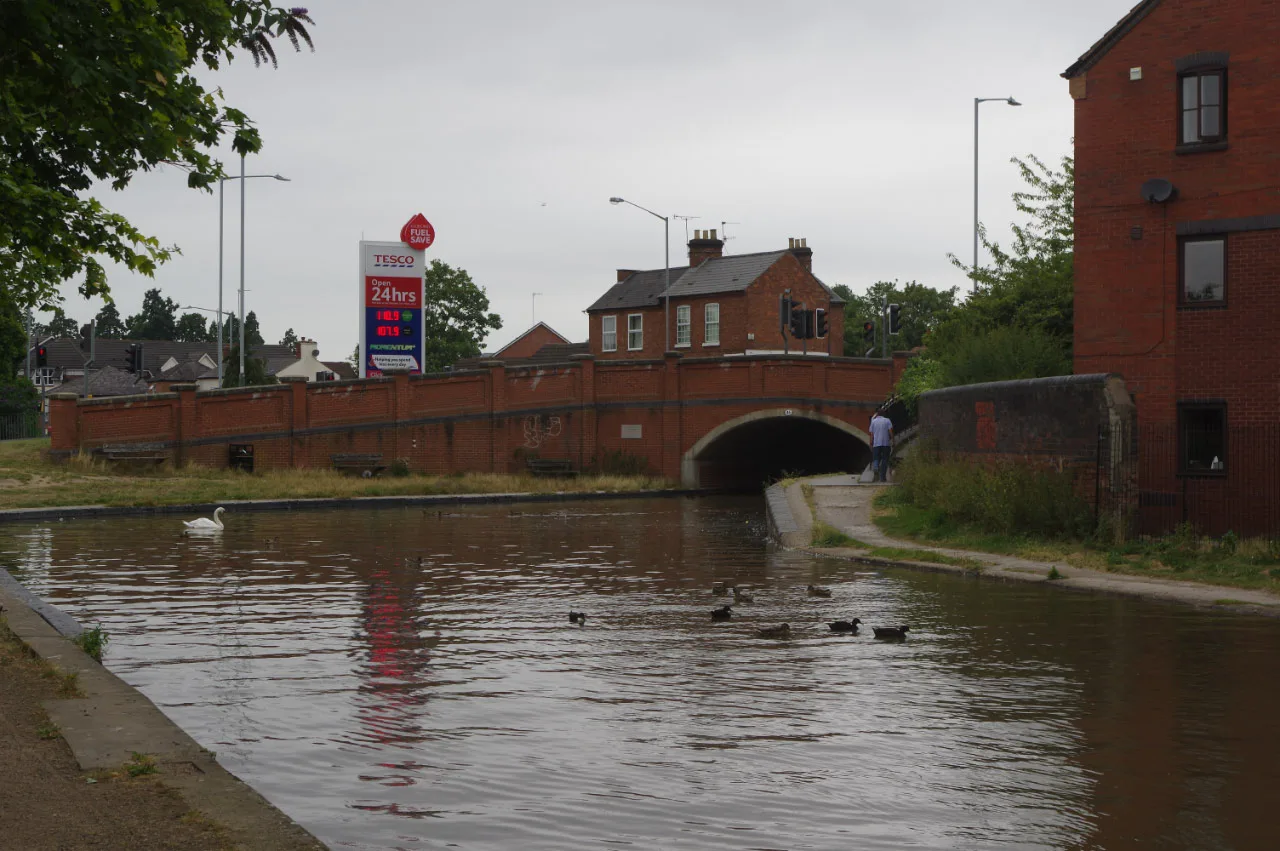

A planning inspector has dismissed Faxton Ltd's appeal to turn four unsold canalside offices at Emscote Old Wharf, Warwick, into flats. Marketed since 2022, no offers, still refused. Here is why.
A planning inspector has dismissed the appeal by Faxton Ltd to convert four empty office units at Emscote Old Wharf, the canalside courtyard off Emscote Road in Warwick, into four two-bedroom flats. The appeal decision, reference APP/T3725/W/25/3371970, is dated 26 June 2026 and was published on Warwick District Council’s planning register under application W/25/0222.
It ends, for now, a four-year effort to find a use for offices that were built alongside nine townhouses and, on the developer’s own evidence, have never had a tenant or a buyer.
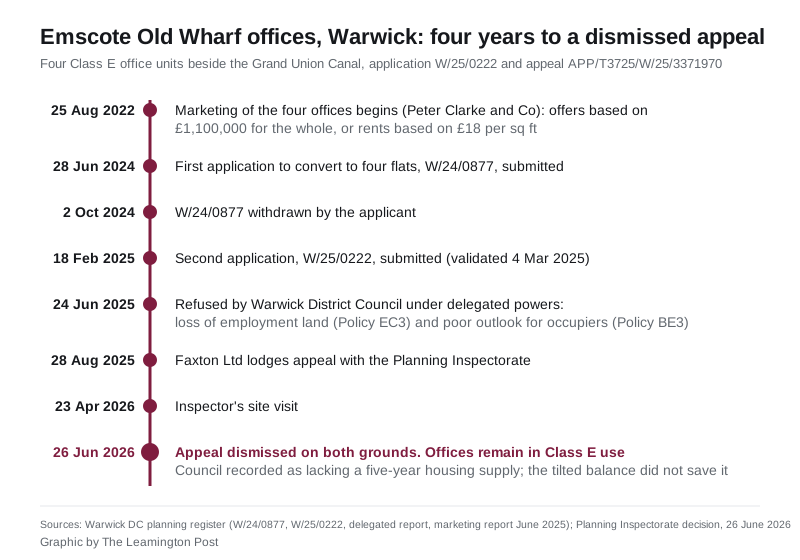
What was proposed
Emscote Old Wharf is a gated courtyard beside the Grand Union Canal, built by Cotswold Oak Ltd, with nine townhouses and four self-contained offices over two floors above ground-level parking. The council’s planning history for the site shows outline consent for nine dwellings in 2015 and, in 2016, permission to demolish an older office on the plot and put up the two-storey office building that now stands empty. The application, W/25/0222, sought a change of use of the office building from Class E to four two-bedroom apartments. It was validated on 4 March 2025 and refused by council officers under delegated powers on 24 June 2025.
It was the second attempt. An identical proposal, W/24/0877, was submitted in June 2024 and withdrawn by the applicant on 2 October 2024.
The council’s delegated report records that no statutory consultee objected: Warwick Town Council, county highways, the district’s conservation officer, environmental health, waste management and the Canal and River Trust all raised no objection. Three public objections were received, all from the same neighbouring household, on overlooking, privacy and overshadowing. Officers refused it on two grounds anyway: the loss of employment floorspace without justification, and the poor outlook the flats would offer the people living in them.
Why the inspector agreed with the council
Inspector S Bennett-Matthews visited the site on 23 April 2026 and dismissed the appeal on both of the council’s grounds.
Living conditions. The flats would have relied on louvred screens over the windows of the main living rooms of three of the four units (plots 10, 11 and 14) and over two of the three windows in the fourth (plot 12). The inspector found the screens “would restrict direct outward views” and, with plot 11’s second bedroom “devoid of any meaningful outlook, relying solely on a rooflight and obscure glazing”, the scheme would produce “a poor outlook and unacceptably constrained and oppressive internal environment for future occupiers”, contrary to Local Plan Policy BE3.
Employment land. Policy EC3 of the Warwick District Local Plan 2011-2029 resists the loss of employment buildings outside town centres unless the applicant shows both that there is enough other employment space to meet local need and that the existing use is not viable, normally evidenced by two years of robust marketing. The inspector found “limited substantive evidence” on the first test and, on the second, that “it is unclear whether the units were consistently marketed for both sale and rental over the full two-year period, and whether the pricing strategy reflected market conditions”. Constraints such as the residential setting, restricted parking and the site’s modest size “do not in themselves demonstrate that the premises are no longer viable for employment use”.
The decision also rejected the fallback argument that the offices could be converted under Class MA permitted development rights, because Class MA requires the building to have been in Class E use for at least two years and “there is no clear evidence before me that the building has been occupied or in active use for this period”.
The marketing record
The appellant’s case rested on the updated marketing report by Peter Clarke and Co, dated 4 June 2025. It states that the offices have been actively marketed since 25 August 2022, on Rightmove Commercial and the agent’s own site, with a board erected on 6 December 2022. Guide terms were offers based on £1,100,000 for the whole building or rents based on £18 per square foot, with the four units ranging from 683 to 824 square feet and each carrying two allocated parking spaces. To June 2024 the agent logged eight named enquiries; since then a single viewing, on 14 November 2024; and no offers at any point. By June 2025 eight of the nine townhouses had sold.
The council did not dispute that the offices were empty. Its officers and the inspector both concluded that an empty building is not the same as an unviable one, and that the evidence had not shown the offices were priced and offered in a way that tested the market properly.
The housing-supply point
One line in the decision matters well beyond Emscote Road. Paragraph 28 records: “The Council acknowledges that it cannot demonstrate a five-year supply of deliverable housing sites.” That triggers the National Planning Policy Framework’s “tilted balance”, under which permission should be granted unless the harm significantly and demonstrably outweighs the benefits.
Even on that footing, the inspector found the four homes would make only “a modest contribution towards housing supply”, and that the harm to living conditions and employment land carried “significant weight” against them. The tilted balance is real in Warwick district while the South Warwickshire Local Plan is still being prepared, but this decision shows it does not rescue a scheme with a design problem of its own.
What it means for you
- Living near Emscote Old Wharf: the offices remain in Class E commercial use. Any fresh application to change that would appear on the Warwick District planning register and on our Leamington and Warwick planning news page. Neighbours were consulted on both previous applications and would be again.
- Owners of empty commercial units: the decision is a clear statement of what Warwick’s Policy EC3 test requires. Two years of marketing must be demonstrably continuous, for both sale and let, at prices that reflect the market, with a record of enquiries, viewings and feedback. A summary that says “no offers” is not enough.
- Anyone watching housing numbers: the council’s admission on five-year supply is on the record in a Planning Inspectorate decision. It will be quoted back at the council in other appeals until an adopted plan and an up-to-date supply figure change the position. Our house prices page tracks what the district’s housing market is doing in the meantime.
- The building itself: the site lies in the Canal Conservation Area, and the inspector found the proposed external changes would have preserved its character. Nothing in the decision prevents the offices being let or sold as offices, which is the outcome the council’s policy is designed to protect.
Have your say